FIngerprint Cards

FIngerprint Cards
Visar inlägg med etikett Visa. Visa alla inlägg

onsdag 16 september 2015

Visa lanserade i dag en ny "specifikation" för användandet av biometri

(SIX) Kreditkortsbolaget Visa lanserade i dag en ny "specifikation"
för användandet av biometri i samband med chipkortstransaktioner.


Specifikationen innebär möjlighet att använda hand-, röst-, ögon-,
eller ansiktsbiometri som validering, enligt ett pressmeddelande.

"Ramverket för denna 'första i sitt slag-teknik' är utformad för
att fungera med EMVs (Europay, Mastercard, Visa), branschstandard för
att säkerställa öppna, globalt driftskompatibla lösningar."

Specifikationen ska stödja "match-on-card-teknik", där biometrin
valideras av ett EMV-chipkort och aldrig utsätts eller lagras i några
centrala databaser. Kortutfärdarna ska dock kunna validera biometriska
uppgifter inom sina egna "säkra system för transaktioner" som sker i
deras egna miljöer, såsom bankens uttagsautomater.

Absa Bank, ett helägt dotterbolag till Barclays Africa Group,
kommer att bli första bank att använda Visas specifikation under en
försöksperiod i höst. Kortinnehavarna kommer att ges möjlighet att
använda fingeravtrycksläsare på utvalda Absa-ägda bankomater i stället
för en pin-kod när de ska göra en transaktion.


Jonathan Axelsson, tel +46 8 586 163 89
mailto:jonathan.axelsson@six-group.se
www.blogg.six.se @SIXNews
SIX News

    söndag 14 juni 2015

    4 ways to pay when you wake up in 2025

    My take on the future of payments and our digital world is to think up a really absurd situation and how it could be solved.
    So, here’s the problem. You woke up in hospital 2 days ago, and your doctor has kindly informed shocked you. “It’s now 2025. Buy a coffee; it’ll help you wake up. Now clear out of my hospital.”
    You find your family and collect your belongings. Your bank has sent you a new Visa card (as your last 4 expired while you were out). Your family treats you to some gadgets – a new phone, smartwatch, hoverboard.
    As instructed, you venture off in search of caffeine. You’re discharged from hospital and drift your way into a Future-Cafe to purchase a Future-Latte. You get to the tills and suddenly, a problem strikes. How do you pay? It’s the future now, you have more options! Decide quickly – the cashier is waiting and you risk your coffee becoming tepid.
    Coffee
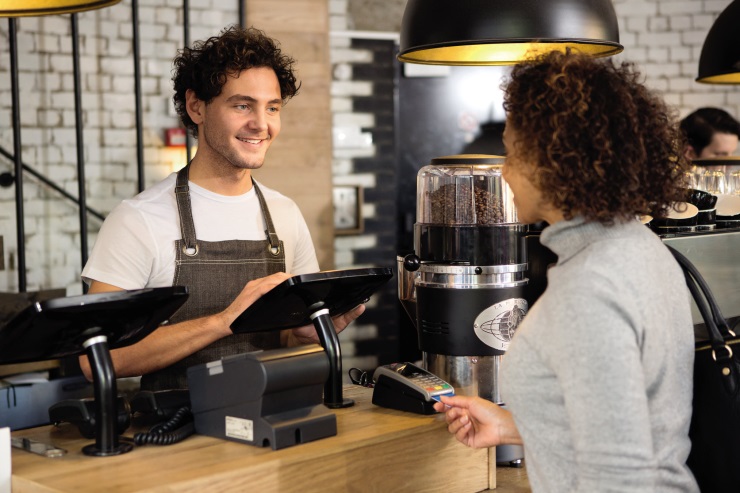
    Figure 1: This cashier is judging your archaic payment method. He asks the inevitable question; “where have you been these last 10 years?” How awkward.
    1. Option 1: Cash
      There is no way in this day and age that you are going to grapple with a handful of shrapnel. It was bad enough 10 years ago – you know that if you go for the coins section of your wallet, silence will fill the café with the sound of disappointment. You could hear a penny drop.Oh look, a penny has dropped. One of yours. Now you’ve got to pick it up. Look at the faces in the queue! Hear the tutting in the air. Smell the disappointment.
    2. Option 2: Use your card
      You know that this is a low-value transaction and putting your card into the reader would be too slow. But you recall the predictions that the acceptance and popularity of contactless was going to keep rising like a balloon filled with helium. You liked it in 2015, so, in 2025, your chances are good that it’ll be accepted by both the terminal and society. You remember feeling awesome paying contactlessly before. It’s a satisfying touch and beep.But, it’s ‘the future’. Surely there are cooler ways to pay now. Using contactless now would be like getting out an iPhone 6 from your pocket. That’s so 2015!
    3. Option 3: Pay by wearable.
      What an idea – you can carry your hoverboard in one arm, another arm free to tap your superfast smart-watch against a contactless reader – and then you can grab your coffee from the counter in one fell swoop of your wrist. What style you have.
    4. Option 4: You’ve already paid.
      You’ve planned ahead. You were fiddling on your new Future-Phone or Future-Watch and you noticed you could order and pay in advance. With one tap. All you’ve got to do is kick up your hoverboard, stroll into the shop, put your sunglasses on and collect your coffee. Sit down – relax – done. The Doctor advised you not to over-exert yourself or get stressed, and you haven’t.
    A thoroughly horrendous and awkward 2025 situation solved with a little advice from me. Surely our archaic payments will have moved on? Isn’t Option 4 such a dream?
    Just like pre-ordering your purchases from stores, you could collect your Future-Coffee from the moment you walk in. You are relaxed, and the queue thinks you are awesome. Look at them all, faffing to pay and collect their coffees. No problem for you.
    ____________________
    Dan Herridge is a second year apprentice in Business Operations. Straight from college into Visa Europe, he’s got a fresh and passionate view on payments. He still gets a bit excited when he realises he can use his contactless card.

    Time is the new currency

    Mobile has become as disruptive and revolutionary as credit cards once were, forever changing the way we think about how we bank and manage our money, how we pay for our travel and how we shop or are entertained.  
    Mobile technology is creating faster and more seamless interactions with our favourite retailers as well as the daily transactions we take for granted such as transportation and buying our morning coffee.
    When you look at why, the answer is simple – it gives people back their time.
    In 2015, time is the new currency.  Any company that can leverage technology to make everyday activities like bill-paying or even the occasional activities like holiday booking faster and easier will change – will disrupt – the status quo.  And, if it can be done safely and securely, people will have the confidence to adopt it at speed.
    This week, Visa Europe announced that it will offer its debit, credit and reloadable prepaid cardholders access to Apple Pay in the UK.  The new Apple Pay will be available starting in July and can be used with the hundreds of thousands of contactless point of sale terminals as are used contactlessly millions of times every day throughout the UK.
    This is the most recent in a series of headline announcements by major players in this arena.  After the September launch of Apple Pay in the US, this year’s Mobile World Congress commenced with Samsung announcing the launch of Samsung Pay followed more recently by Google’s intention to launch Android Pay in the US this July.
    On the other side of the equation is the consumer appetite for these products.  We recently unveiled the results of a consumer study we conducted looking into the appetite for using mobile devices as a form of payment.  We found that people across Europe are enthusiastic about the idea of using their smartphones and other devices to shop, send money to friends and interact with their bank.  In fact, the study projects that the number of people using their mobile device to make a payment on a daily basis will more than double over the next five years.
    This study has captured an important moment in time as we are at an inflection point in how we buy things.
    For more on the future of mobile, check out the video:

    torsdag 7 maj 2015

    Visa seeking biometric payment partners

    Global payments giant Visa is seeking industry partners as it looks to develop biometric solutions for the payments industry. Speaking at the Australian edition of CeBIT 2015, George Lawson, Visa Australia and New Zealand’s head of emerging products and innovation, said on Tuesday that frictionless payments were the future. 


    The actual process of payments would gradually "slip to the background" as biometrics, authorised internet connected devices and contactless payment systems come to the fore, said Lawson, reported Banking Day. 

    In Australia, 60 per cent of card transactions were now contactless, running at a rate of 70 million a month, giving the country the highest adoption rate of contactless payments in the world. "We are looking to work with industry on the issue. 

    If I use a biometric how can I re-use that in another instance on the device?" he asked. However, Lawson noted that the biometric data and authentication processes would have to be managed by a trusted party in the payments equation – not necessarily Visa itself. - See more at: http://www.planetbiometrics.com/article-details/i/3015/desc/visa-seeking-biometric-payment-partners/#sthash.w5BnPzJE.dpuf

    onsdag 22 april 2015

    Kina kan komma att öppna upp för Mastercard och VISA.

    Den kinesiska staten indikerade under onsdagen att det kan komma att bli  
    aktuellt att avsluta det befintliga monopolet på bankkortsklarering. En  
    förändring som skulle möjliggöra ett intåg för bland andra Mastercard och  
    VISA. 


    Enligt nya regler som publicerades under onsdagen kommer det efter den  
    första juni att vara möjligt för utländska företag att söka de tillstånd  
    som i förlängningen möjliggör kortbetalningar. Det är sedan tidigare och  
    fram till den första juni uteslutande China UnionPay som har den sortens  
    tillstånd, skriver Bloomberg Business. 

    Kina hade enligt centralbanken under 2014 4,9 miljarder bankkort med ett  
    sammanlagt transaktionsvärde om 73 biljoner dollar. Något en analytiker vid  
    FBR Capital Markets benämner som en mycket stor möjlighet, skulle de  
    amerikanska kortföretagen få tillgång till den marknaden. 


    Gustav Skogh 
    Nyhetsbyrån FinWire 
    gustav.skogh@finwire.se 
    twitter:@finwire 

    onsdag 21 januari 2015

    Samsungs kommande smartphone Galaxy S6.

    Ytterligare detaljer kring Samsungs kommande smartphone Galaxy S6
    fortsätter att läcka ut. Det sydkoreanska bolaget uppges samarbeta med
    kreditkortsjätten Visa för att lansera Samsung Pay, en liknande tjänst som
    Apple Pay. Det skriver tekniksajten SamMobile.


    Samsung sägs även samarbeta med McAfee för att skydda användarna mot
    spyware, spam och virus.

    Detaljer kring samarbetet med Visa framgår inte, men enligt SamMobile kan
    det innebära att kort utgivna av Visa automatiskt är kompatibla med Samsung
    Pay. Sedan tidigare har Samsung samarbetat med PayPal och användare av
    bland annat Galaxy S5 och Note 4 kan betala med hjälp av mobilen och
    identifiera sig med hjälp av den inbyggda fingeravtryckssensorn.

    Som tidigare rapporterat väntas Samsung ha valt en touchbaserad
    fingeravtryckssensor till Galaxy S6, till skillnad från swipesensorn i
    tidigare modeller.


    Stefan Linnér
    stefan.linner@finwire.se, 0701-15 39 64
    Nyhetsbyrån Finwire

    Samsung samarbetar med betalningsföretaget Visa.

    Samsung samarbetar med betalningsföretaget Visa gällande nya funktioner i den kommande flaggskeppsmodellen Galaxy S6.


    Det rapporterar sajten Sam Mobile som är inriktad på nyheter om telefoner från just Samsung.

    Enligt vad sajten erfar är samarbetet med Visa ett försök att lyfta Samsung Pay, en betaltjänst som konkurrerar med Apples motsvarighet.

    Häromdagen rapporterade Sam Mobile, på basis av obekräftade uppgifter, att Samsung överväger att använda så kallade touchbaserade fingeravtryckssensorer på Galaxy S6, i stället för det som brukar kallas swipe-sensorer. Den senare typen kräver att man måste svepa fingret över sensorn, något som inte behövs med touch.

    I onsdagens artikel kopplar Sam Mobile ihop bytet av sensorstyp med samarbetet med Visa och de eventuellt nya funktionerna som det mynnar ut i.


    Uppgifterna om bytet av sensortyp har lett till spekulationer om vem som eventuellt ska leverera touchsensorer till världens största mobiltelefontillverkare. Såväl svenska Fingerprint Cards som amerikanska Synaptics har förekommit i spekulationerna.

    Samsung väntas av många bedömare lansera Galaxy S6 på mobilmässan i Barcelona i början av mars.

    Visa: 'Generation Z' wants biometric security, not passwords.

    A large majority of young British adults are ready to adopt biometric security for payments, according to a new survey commissioned by Visa Europe.


    In the survey of 2,000 respondents, 76% of 16- to 24-year-olds said they were comfortable making  payments using biometric security such as fingerprint, iris or facial recognition.
    In addition, 69% believed the transition would make their lives faster and easier.  
    Fingerprint emerged as the favoured modality, with 70 per cent predicting that this will be the primary form of identification by 2020.

    Retina scans came a distant second at 39pc, followed by facial recognition at 27%. Lower down the list was voice recognition at 12pc, implanted chips at 16pc and rapid DNA samples at 15%.
    “We have more logins and passwords than ever to help keep us secure online and on the high street, but for Gen Z it just feels like an unnecessary burden," Jonathan Vaux, Executive Director at Visa Europe, told The Daily Telegraph.

    "Biometric authentication using fingerprint recognition or retinal scans offers an ideal solution, combining unique security and ease of use. As products come online with these features integrated, we expect to see multiple passwords as the industry standard begin to decline."