FIngerprint Cards

FIngerprint Cards
Visar inlägg med etikett Google. Visa alla inlägg

onsdag 25 november 2015

Google Nexus 6P – elegant och enkel mobil i toppklass

Prisjämförelser från Prisjakt.nu
Bild på Google Nexus 6P 32GB från Prisjakt.nu
Google Nexus 6P 32GB
Klicka här för att jämföra alla butikerDe två nya Google-telefonerna introduceras på Svenska marknaden med ett par veckors mellanrum. Nexus 5X kan du få tag på redan i dag, men det dröjer till tidigast i slutet av nästa vecka innan Nexus 6P börjar levereras. Den går inte ens att förbeställa (ännu) från Google. Däremot går det bra att göra det från ett stort gäng svenska butiker. Troligen kommer den kosta ett par, tre hundra mindre än det vanligast förekommande priset i butik idag vilket är 6290 kronor inklusive frakt.
Nexus 6p
Den Nexus 6P vi testade var denna gråsvarta modell.
En intressant detalj är att medan Nexus 5X har växt till 5,2 tum (Google 5 var på 4,95 tum), så har Nexus 6P krympt. Föregångaren var på 5,96 tum, och den nya är på 5,7 tum.  Om detta är ett medvetet designval eller om det beror på tillgången på skärmpaneler kan vi bara spekulera, men resultatet är att de bägge telefonerna är mer lika varandra nu när det gäller handhavande och ergonomi.
 

Snyggaste Nexusen hittils?

5,7 tum kan fortfarande vara ett otympligt format för många användare, men för de som inte har problem med storleken får här en ypperligt utformad och bekväm smartphone med enkelt med snyggt yttre och skön passform i handen. Nexus 6P är byggd av Huawei och kineserna har tagit den solida lyxkänsla som vi gillar med deras senaste egna modeller Honor 7 och Mate S och finslipat den ytterligare.

Telefonen är trevligt tunn med sina drygt sju millimeter, eller dryga åtta om vi tittar högst upp på bakstycket. Den sticker ut något där med en svart blank plastdel som bryter av en aluminiumkropp i antingen mörkgrå eller ljusgrå matt yta. Här sitter kameran och också en del kommunikation som nfc-chip och de flesta antenner. Mitt baktill hittar vi en fingeravtrycksläsare, ett designval som Huawei är vana vid sedan tidigare och som alltså Google nu adopterat i både Nexus 6P och Nexus 5X.

Även här får vi laddning via usb c-kontakt. Den här gången är det även en c-typ på utgången på den medföljande laddaren, och vi får en dubbelriktad usb c-kabel. Det är riktigt praktiskt. Inte bara slipper vi bry oss om vilket håll vi pluggar in kontakten, vi behöver inte heller tänka på vilken ända av sladden som går in var. Vi får också med en sladd från stor usb till liten usb c så att den går att plugga in i datorer utan usb c eller i en gammal mobilladdare.
Nexus 6p

måndag 28 september 2015

Googles nyheter väntas slå HTC

Börs Både Google och HTC håller lanseringsevent i morgon kväll. Och enligt 
ryktena är det amerikanska it-jätten som kommer med de hetaste nyheterna.


Den Google och den taiwanesiska telefontillverkaren HTC tävlar om uppmärksamheten under tisdagen den 29 september, då båda håller evenemang med förväntade lanseringar. Ska man ta fasta på ryktena väntas emellertid Googles lanseringar bli mer spännande än HTC:s.
Vid Googles event i San Fransisco väntas Androidmodellerna Nexus 6P, från tillverkaren Huawei och den LG-tillverkade Nexus 5X presenteras. Enligt uppgifterna på flera tekniksajter väntas båda modellerna ha en fingeravtryckssensor på baksidan av telefonen.
HTC uppges i sin tur vänta med att lansera sin mycket omskrivna nya flaggskeppsmodell One A9 (Aero), som enligt läckta bilder verkar ha en fingeravtryckssensor på framsidan.
Tidigare gjorde spekulationer gällande att den modellen skulle lanseras vid tisdagens HTC-evenemang, som hålls i Japan. I stället väntas nu uppdaterade versioner av modellerna One M9+ och Butterfly 3-modellen för Kinamarknaden lanseras.
Vissa tekniksajter spekulerar i att HTC skjuter på att visa upp sin nya flaggskeppsmodell Aero till senare i år, på en dag då den inte riskerar att hamna i skuggan av Google.
Under helgen uppges en Google Nexus 6P-presentation ha läckt ut med en hel del specifikationer, som i stort sett bekräftar de spekulationer som cirkulerat kring modellen under en lägre tid.
Enligt uppgifterna på flera tekniksajter ska Huaweis Nexus 6P ligga i ett något högre segment än LG:s Nexus 5X. Huaweimodellen uppges ha en Qualcomm Snapdragon 810 processor och en 5,7 tum stor skärm, vilket kan jämföras med LG-modellens Snapdragon 808 processor och skärm på 5,2 tum.
En lansering av den nya versionen av operativsystemet Android 6.0, eller Marshmallow, väntas också.

onsdag 9 september 2015

Google går med i Mastercard-program för att påskynda utrullningen av Android Pay

Google har gått med i Mastercards Digital Enablement Express Program, något
som uppges påskynda utrullningen av nya betaltjänsten Android Pay.


- Vi ser fram emot att erbjuda världsledande betalningsupplevelser till
konsumenter med Android Pay. Samarbetet med Mastercards Express-plattform
kommer att ge oss ett mycket skalbart sätt att göra det möjligt för
utgivande banker att delta i Android Pay, samtidigt som vi lanserar en
tjänst med bred åtkomst för kunderna, säger Ariel Bardin, ansvarig för
betalningstjänster inom Google.

Genom Mastercards plattform får finansiella institutioner tillgång till de
senaste digitala betalningstjänsterna.

Android Pay presenterades vid Google I/O-konferens i somras och ska rullas
ut under hösten. Tjänsten konkurrerar med bland annat Apple Pay.


Stefan Linnér
stefan.linner@finwire.se, 0701-15 39 64
Nyhetsbyrån Finwire

måndag 8 juni 2015

Google kommer inte kunna ta ut transaktionsavgifter i nya mobila betaltjänsten

Google kommer inte dra in några pengar i avgifter för sin kommande mobila
betaltjänst Android Pay. Kreditkortsutgivarna hoppas nu att det ska sätta
press på Apple att sänka eller helt ta bort sina avgifter menar chefer i
branschen, skriver Wall Street Journal.


Google presenterade sin nya tjänst Android Pay i slutet av maj. Det ska
lanseras i samarbete med operatörer, betalningsnätverk, detaljhandlare och
banker. Tidigare har hundratals finansiella institutioner samarbetat med
Apple kring deras betaltjänst för att inte hamna på efterkälken inom mobila
betalningar. De har därför gått med på att betala 0,15 procent av varje
transaktion till Apple.

Källor med insyn menar nu dock att Google inte kommer få samma typ av
transaktionsavgifter från kortföretagen. Det beror på att Visa och
Mastercard nyligen har standardiserat sin säkerhetslösning kring
"tokenization" vilket utgör ett hinder för betaltjänster att ta ut
avgifter.

De flesta av Apples kontrakt är på tre år och har därför runt två år kvar.


Stefan Linnér
stefan.linner@finwire.se, 0701-15 39 64
Nyhetsbyrån Finwire

torsdag 4 juni 2015

Nexus 5 with fingerprint scanner revealed in new Google video

The latest version of Android includes fingerprint scanning support, and it turns out Google already has a Nexus device equipped to show off the new feature. The company recently revealed a modified version of the Nexus 5 with a biometric reader.

The video, which details how new APIs for fingerprint scanning and mobile payments will work with Android M, offers a clear look at the upgraded Nexus 5. Unfortunately, this isn’t a new device. Instead, Google’s somehow figured out how to enhance the older device, adding an extra module in back next to the camera.

Still, it’s possible the company could unveil something similar later this year. Google and LG are reportedly working on a new Nexus phone with a 5.2-inch display, and we wouldn’t be surprised if the device featured a fingerprint reader as well. The upcoming handset may also include a 2700mAh battery and a Snapdragon 808 processor. A reversible USB C charging port seems likely, too.
For now though, this hacked Nexus 5 may be our best look at Google’s future smartphone. Hopefully the real thing boasts a nicer design than this homemade handset.

Google´s Android Fingerprint Sensor comes with Swedish touch

Last week, during its yearly and awaited developer conference in San Francisco, Google unveiled Android M, which will be available to the public next summer.


One of its main new features is “Android Pay,” the improved version of Google Wallet of which the future is unclear at this point. “Android Pay” will let the user pay for things with his or her phone, without having to open an app, via fingerprint sensors for in-store and in-app purchases. It works more or less the same way as main competitor Apple Pay.
Android M’s fingerprint sensors were developed in cooperation with Swedish Fingerprint Card (FPC). The fingerprint sensor will enable app developers to take advantage of fingerprint sensors securely, eliminating the need for PIN codes or passwords to identify and verify the user.
According to Reuters, Fingerprint shares jumped to a record high at 5.1 percent by 0724 GMT last Friday. Jörgen Lantto, President and Chief Executive Officer of FPC, mentioned during the conference that Fingerprint’s forecast of revenue exceeds $177 million in 2015. Moreover, he is convinced that the launch of Android M will contribute to the fingerprint sensors’ market growth in 2016, possibly even earlier.
“By incorporating fingerprint sensor technology in Android M, Google is taking a major step with a more secure and convenient way for user identity verification. This will spur further innovation by app developers, improve usability of Android devices and accelerate market growth for fingerprint sensors. We are very pleased to have supported Google in their effort to develop and integrate fingerprint sensor capability in Android M. We commend Google for its vision and drive in taking this innovative step in creating an even stronger Android ecosystem,” said Lantto.

Google+Nexus+FPC

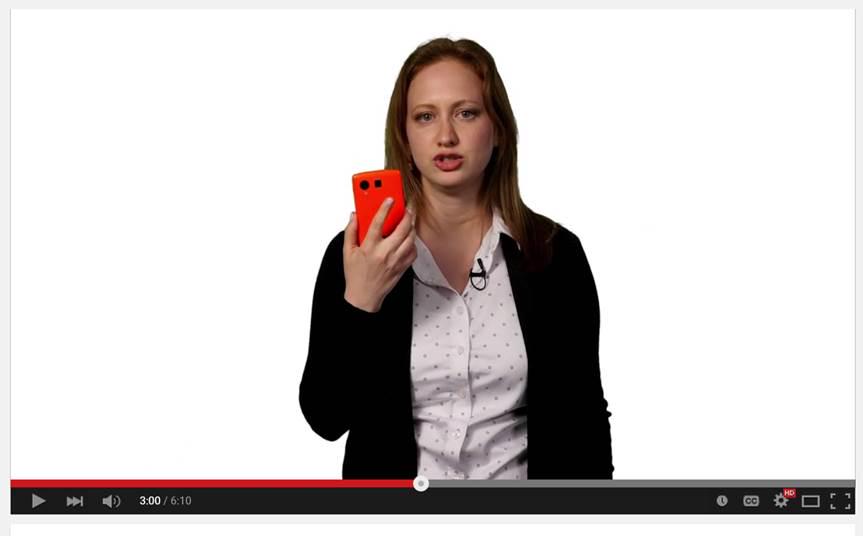
Maya Ben Ari from Google holding FPC modified Nexus phone with FPC1025

The 12 most important announcements from Google I/O 2015


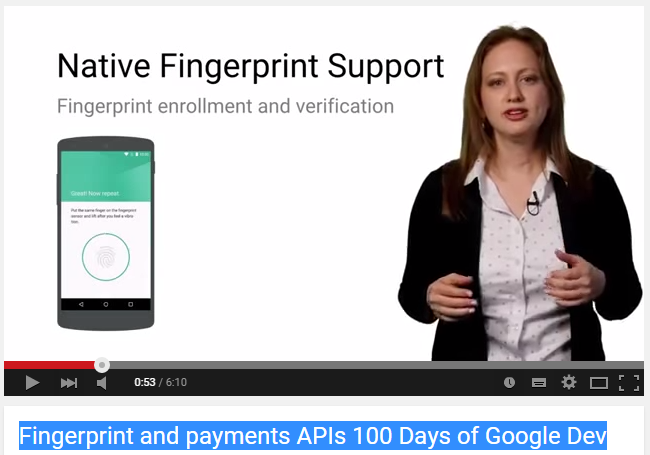
Fingerprint and payments APIs


Payment APIs


New fingerprint and payments APIs are introduced in M, to enable enhanced UX and security for online purchasing, banking, and retail payments.1. Fingerprint Manager API - allows apps to authenticate a user using his fingerprint, when one is available, and receive an Authentication Callback from the sensor once a finger has been detected. The API provides the app full control on the user experience and the UI2. Confirm Device Credential API - allows apps to create a hardware bound cryptographic objects and tie those to lock screen. It allows the app to define a policy to access those keys (“e.g., did user unlock in the last 10 minutes”), and sync those timeout across the system. The two APIs provide apps both convenience and security, and it is up to the app to decide which solution fits him best. To try the APIs please download Android M preview release. 

100 Days of Google Dev / 100 developer videos over 100 days / #GoogleDev100 

torsdag 28 maj 2015

Google I/O 2015 rumor roundup

Google sign

Share This Article

231437
Google’s annual developer conference kicks off in San Francisco tomorrow. While it’s still ostensibly about developers, Google I/O is also an opportunity for Google to show off what it’s been doing over the past year, and talk about the new products and services we’ll have soon. Last year Google announced Android L (later Lollipop), the first available Android Wear devices, Android Auto, new Chromecast features, and more.
Let’s take a look at what the rumor mill has churned out as we approach the big day. Here are the things you can expect Google to talk about during the keynote on Thursday.

Android M

Google outed itself when it posted the new I/O schedule — one of the sessions on the agenda clearly referenced Android M, so we know that’s happening. Google removed the listing, but you can’t stop the speculation. Since then, a number of important details have come to light.
First up, Android M will once again have a developer preview available for download shortly after the keynote. Android L was the first time Google did this, but apparently it’s a trend now. It will probably only run on recent Nexus devices like the Nexus 6 and Nexus 9. Maybe older phones like the Nexus 5 will get in on the fun too. This will hopefully help developers get out ahead of the changes so they can be ready to go when M comes out.
m
As for the features in Android M, it seems it’s a lock that Google will add native fingerprint scanning to the platform. There have been a lot of commits in the Android Open Source Project (AOSP) that point this way, and there are a few reports that say the same. We’re also expecting security improvements in the form of a revamped permission system. Apple has been seen as more user friendly in this respect for the last few years, but that might be changing.
permissionsThe way apps work right now on Android, you can see the permissions when you install something, but that’s it. If you install, the apps get whatever permissions they asked for. Android M might borrow a little from Apple by allowing users to reject individual permissions like location access or contact reading.
Google has also started to branch out and allow third-party apps to plug into the Now service in recent months, but I’d wager that will become an official open feature in Android M. Developers should be able to embed cards in Now with proper controls for users to get rid of them. There may even be a way to place Google Now in third-party launchers, which isn’t currently possible. Developers might also find themselves coping with Google’s new interest in battery life. Android M will allegedly have a focus on keeping battery usage down by making sure background apps don’t ping the system too often.
Android Pay has been confirmed by Android head Sundar Pichai, but he didn’t explain in too much detail what it will do. We can look forward to all the specifics at the keynote. This may or may not be limited to Android M, but we know that Pay will offer a platform for app developers to plug into the secure NFC payment method on devices. Google Wallet will do the same thing, so it’s not being replaced by Pay. Google is reportedly offering carriers a small cut of Android Pay sales so they’ll promote it. Carriers get nothing from Apple Pay. Android Pay will also support fingerprint authentication in the future.

Android Wear

Google’s wearable platform is based on the same software that runs phones and tablets, but Android Wear is much more stripped down. Still, with a new version of Android itself, there will probably be things to say about Wear too. It’s likely the long-rumored iOS support for Android Wear watches will be debuted, though. Expect a few minor refinements in the software experience with Wear, but the potential hardware announcements will be much more interesting.
Android Wear
There are two watches floating out there at the periphery that could make an appearance at I/O and make people very happy. There’s a watch in the works that will run Android Wear with an Intel processor and hardware designed by Tag Heuer. I’m sure it will look very nice, but the price is rumored to be about $1,400.
Huawei has already announced its Android Wear watch, but there haven’t been any more details on this device since Mobile World Congress. It has a round display, metal body, and a wide selection of 18mm bands. The price is unclear, but it certainly won’t be $1,400. Google I/O would be a good time and place to finally announce these things.

New Google Photos

There have been rumors of a proper re-launch of Google’s photo platform for months, and we know this is happening at I/O. The new Android Photos app has leaked, but it’s not just about Android. Google is taking Photos and making it a distinct product that still has strong ties to Google+. This isn’t necessarily a bad thing for Google+, but it puts Photos in a more easily accessible place. Instead of people avoiding it because they don’t want to dig into G+, it will have its own URL at photos.google.com.
Photos
The Android app contains all the auto-backup features, sorting, auto-categorization, and sharing features that Photos in Google+ had. It gains a few new tricks like more control over auto-awesome enhancements and stories (a feature collectively called Assistant now). The new Photos experience will also have support for a nifty method of sharing content with a link that you can deactivate at any time.
This will probably roll out shortly after the keynote, or possibly even before if you’re watching closely enough.

Chromecast 2

Google announced the Chromecast two years ago, and it was a smashing success. After years of living room disappointment, it turns out all Google needed to do was produce a cool piece of inexpensive hardware and get out of the way. The streaming media Google Cast protocol has since found its way to Android TV and a number of wireless speakers. That original piece of hardware could use some love, though.
Chromecast
We know Google is working on new hardware, and Google I/O seems like a good time to show it off. There are going to be several developer sessions at I/O about Google Cast, so that would jive nicely with new hardware. Some of the things Google wants to do will require a hardware update.
For example, the original Chromecast doesn’t support 802.11ac networks, or even 5GHz wireless N. It also can’t handle 4K video, 60fps video signals, or YouTube 3D videos. The Chromecast needs to stay inexpensive, but with a few years since the last iteration, Google ought to be able to keep the price point and beef up the feature set.

Brillo IoT

One of the more recent rumors for I/O is that Google is working on an operating system for connected home devices, the so-called internet of things (IoT). This isn’t google’s first shot at home automation. Do you remember Android@Home? Of course you don’t, because Google talked about it once four years ago at I/O and never mentioned it again.
The new vision for the Google IoT is code named Brillo. It’s a stripped-down version of Android that can operate on devices with 32 to 64MB of RAM. So we’re talking about things like smart lightbulbs, door locks, refrigerators, and more. Google basically wants to be the unifying force in your smart house, and we could definitely use one.
There are currently half a dozen competing home automation standards, so you always have to worry if the device you’re buying can talk to the other ones you already have. Google is in a particularly good place to make things a little less crazy. It owns both Nest and Dropcam, which are popular options for connected thermostats and security cameras, respectively.

Project ARA and Glass

Two of Google’s most futuristic products might show up at Google I/O, but there’s no solid information on this. Still, it’s about time that Google Glass came out of hiding after being turned upside down a few months back with promises of a new version. The Glass Explorer Edition hardware was rather bulky, and it didn’t offer the best battery life. It was also plagued by waves of bad press from the mainstream media who worried about privacy invasion and the general creepy factor. Google didn’t help by keeping the price high and not releasing new hardware.
Project Ara concept art
Meanwhile, Project Ara is supposed to be ready for a real world beta test later this year. This modular smartphone project was inherited by Google when it bought Motorola several years ago. Consumers will apparently be able to pick and choose which modules to put in their phone shell and have it all work together. There are a lot of questions that need to be answered on both fronts, and I/O is the place to do it.

And probably more…

Google will probably have at least a few surprises up its sleeve at I/O 2015. No matter how much we think we know, Mountain View always seems to keep a few good things under wraps. The fun kicks off with the keynote on Thursday May 28th at 9:30AM PDT.
STOCKHOLM (Direkt) Google bekräftar att företaget kommer att använda sig av en fingeravtryckssensor i nästkommande telefon Andriod M. 


Detta framgår av Googles årliga utvecklarkonferens, Google I/O, som hålls i San Fransisco under torsdagskvällen. Fingeravtryckssensorn kommer bland annat låta användare låsa upp sin Android M. 

Sensorn väntas även göra betalsystemet Android Pay både snabbare och enklare.